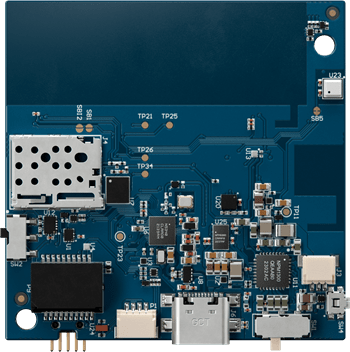
 Nordic Thingy:91 X product brief [PDF]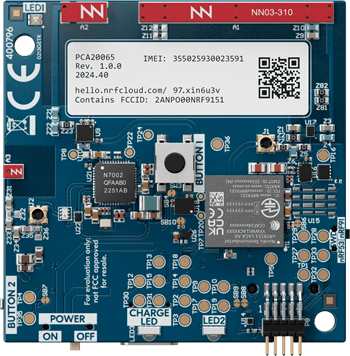
Precompiled application and modem firmware
Selected version
thingy91x_mfw-2.0.2_sdk-3.0.0 [Latest version]
Changelog:
thingy91x_mfw-2.0.2_sdk-3.0.0 [Latest version] thingy91x_mfw-2.0.2_sdk-3.0.0.zip https://nsscprodmedia.blob.core.windows.net/prod/software-and-other-downloads/dev-kits/thingy91-x/application-firmware/thingy91x_mfw-2.0.2_sdk-3.0.0.zip
Changelog:
- Includes FW from nRF Connect SDK 3.0.0
- Includes Modem Firmware v2.0.2
The following samples and applications are part of the package:
- Serial LTE modem
- Hello nRF Cloud
- nRF Cloud multi-service
- Enabled
overlay_coap.confandoverlay-coap_nrf_provisioning.conf
- Enabled
- Modem Shell
- AT Client
- nRF53 - Connectivity Bridge
thingy91x_mfw-2.0.2_sdk-2.9.0 thingy91x_mfw-2.0.2_sdk-2.9.0.zip https://nsscprodmedia.blob.core.windows.net/prod/software-and-other-downloads/dev-kits/thingy91-x/application-firmware/thingy91x_mfw-2.0.2_sdk-2.9.0.zip
Changelog:
- Includes FW from nRF Connect SDK 2.9.0
- Includes Modem Firmware v2.0.2
The following samples and applications are part of the package:
- Serial LTE modem
- Hello nRF Cloud
- nRF Cloud multi-service
- Enabled
overlay_coap.confandoverlay-coap_nrf_provisioning.conf
- Enabled
- Modem Shell
- AT Client
- nRF53 - Connectivity Bridge
thingy91x_mfw-2.0.2_sdk-2.9.0-preview thingy91x_mfw-2.0.2_sdk-2.9.0-preview.zip https://nsscprodmedia.blob.core.windows.net/prod/software-and-other-downloads/dev-kits/thingy91-x/application-firmware/thingy91x_mfw-2.0.2_sdk-2.9.0-preview.zip
First release for Thingy:91 X
Changelog:
- Includes FW from nRF Connect SDK 2.9.0-preview
- Includes Modem Firmware v2.0.2
The following samples and applications are part of the package:
- Serial LTE modem
- Hello nRF Cloud
- nRF Cloud multi-service
- Enabled
overlay_coap.confandoverlay-coap_nrf_provisioning.conf
- Enabled
- Modem Shell
- AT Client
Hardware files
Selected version
1.0.0
Changelog:
1.0.0 PCA20065-Thingy91 X 1_0_0.zip https://nsscprodmedia.blob.core.windows.net/prod/software-and-other-downloads/dev-kits/thingy91-x/hardware-files/pca20065-thingy91-x-1_0_0.zip
- First release for Thingy:91 X (PCA20065)
Feature Brief
for the nRF91x1 SiP modem firmware
nRF91x1 SiP LTE firmware - what it is and how it works
The nRF91x1 SiP LTE firmware is provided as pre-compiled binaries, signed and encrypted by Nordic Semiconductor.
-
Details
- Pre-compiled binary, signed and encrypted
- Update via PC tool nRF Connect for Desktop
- Secure boot with image authentication
- LTE Rel-14 Cat-M1 (LTE-M/eMTC)
- LTE Rel-14 Cat-NB1/2 (NB-IoT)
- Type B half duplex (HD), frequency division duplex (FDD)
- Cat-M1 operation is enabled on E-UTRA Bands 1, 2, 3, 4, 5, 8, 12, 13, 18, 19, 20, 25, 26, 28, 66
and 85. - Cat-NB1 operation is enabled on E-UTRA Bands 1, 2, 3, 4, 5, 8, 12, 13, 17, 19, 20, 25, 26, 28, 65, 66
and 85. - Power saving
- Power Save Mode (PSM)
- Idle-DRX and Connected Mode-DRX, DRX/extended-DRX in both
- Independent clock and sleep state control
- Support for 3GPP CP-RAI and AS-RAI (Release Assistance Indication)
- Support for MAC Inactivity Monitoring
- Support for NIDD (Non-IP Data Delivery)
- First LTE search optimizations
- Modem Sleep notifications
- Pre-evaluation of a connection
- LTE based positioning
- Interface to Application CPU
- AT-command Interface for control
- Socket Interface for Data
- Modem production test support
- Antenna Tuner per band Configurability with limited MIPI-RFFE support
- Integrated TLS(1.2)/DTLS(1.2) and TCP/UDP/IPV4/IPV6 Dual Stack
- Storage of TLS and Cloud credentials
- SMS PDU Mode
- Differential FOTA support enables small upgrade images
- Support for SIM ATK and remote provisioning via Bearer Independent Protocol
- eSIM support
- GPS L1 C/A and QZSS L1C/A positioning
- GPS L1 C/A and QZSS L1C/A receiver during LTE PSM and Idle DRX/extended-DRX modes
- GPS time based configurable IO-pin / pulse
- Single shot, fixed interval and continuous tracking modes
- Pre-compiled binary, signed and encrypted
-
TLS Cipher suites
-
mbed TLS Name / NIST Name
Value
TLS-ECDHE-ECDSA-WITH-AES-256-CBC-SHA384
{0xC0,0x24}
TLS-ECDHE-ECDSA-WITH-AES-256-CBC-SHA
{0xC0,0x0A}
TLS-ECDHE-ECDSA-WITH-AES-256-GCM-SHA384 {0xC0,0x2C} TLS-ECDHE-ECDSA-WITH-AES-128-CBC-SHA256
{0xC0,0x23}
TLS-ECDHE-ECDSA-WITH-AES-128-CBC-SHA
{0xC0,0x09}
TLS-ECDHE-ECDSA-WITH-AES-128-GCM-SHA256 {0xC0,0x2B} TLS-ECDHE-RSA-WITH-AES-256-CBC-SHA
{0xC0,0x14}
TLS-ECDHE-RSA-WITH-AES-128-CBC-SHA256
{0xC0,0x27}
TLS-ECDHE-RSA-WITH-AES-128-CBC-SHA
{0xC0,0x13}
TLS-ECDHE-RSA-WITH-AES-128-GCM-SHA256
{0xC0,0x2F} TLS-ECDHE-RSA-WITH-AES-256-GCM-SHA384 {0xC0,0x30} TLS-PSK-WITH-AES-256-CBC-SHA
{0x00,0x8D}
TLS-PSK-WITH-AES-128-CBC-SHA256
{0x00,0xAE}
TLS-PSK-WITH-AES-128-CBC-SHA
{0x00,0x8C}
TLS-PSK-WITH-AES-128-CCM-8
{0xC0,0xA8}
TLS-EMPTY-RENEGOTIATIONINFO-SCSV {0x00,0xFF}
-
nRF91x1 SiP LTE firmware
Programming app available in nRF Connect for Desktop
Selected version
2.0.3 nRF91 firmware binaries
Changelog:
2.0.3 nRF91 firmware binaries mfw_nrf91x1_2.0.3.zip https://nsscprodmedia.blob.core.windows.net/prod/software-and-other-downloads/sip/nrf91x1-sip/nrf91x1-lte-modem-firmware/mfw_nrf91x1_2.0.3.zip sc_DownloadFirmware_nRF91x1modem
This release support nRF9131 LACA A0, nRF9151 LACA A0/A1, and nRF9161 LACA A0 SiP modules.
This release does not support nRF9160 SiP.
Highlights:
Maintenance release with new features, and corrections and improvements for service reliability.
Cellular IoT
- Added support for E‑UTRAN LTE‑M and NB‑IoT Band 106
- Improved Rx‑only mode (AT+CFUN=2): supports network search/selection, emits +CEREG and %MDMEV SEARCH statuses, adds AT%NCELLMEAS, and improves AT%CONEVAL performance
- Introduced AT%ENVEVAL to scan and evaluate specified PLMNs and report signal quality via the AT interface
- Added a simplified AT%XRFTEST TX test mode; full capabilities remain in the production test firmware
- Added APDU trace support in the public trace database
- Added a power‑saving safeguard to prevent staying connected to cells without usable connectivity; configurable via AT%FEACONF
- Added Positioning Reference Signal (PRS) data capture for application‑level processing (requires nRF Connect SDK support)
- Corrections and improvements for service reliability
A complete list of new functionality, changes and bug fixes is in the release notes found here or inside the .zip file.
This release is aligned with v1.4 of the nRF91x1 Cellular AT Commands Reference Guide.
Some of the new features requires support also from the nRF Connect SDK, and it is recommended to ensure compatibility with the appropriate version of the SDK.
It is advisable to use the latest version of nRF Connect for Desktop and nRF Connect Programmer tools.
2.0.2 nRF91 firmware binaries mfw_nrf91x1_2.0.2.zip https://nsscprodmedia.blob.core.windows.net/prod/software-and-other-downloads/sip/nrf91x1-sip/nrf91x1-lte-modem-firmware/mfw_nrf91x1_2.0.2.zip sc_DownloadFirmware_nRF91x1modem
This release support nRF9131 LACA A0, nRF9151 LACA A0, and nRF9161 LACA A0 SiP.
This release does not support nRF9160 SiP.
Highlights:
General
-
Maintenance release with corrections for service reliability and new features.
Cellular IoT
- Delayed IPv6 updates until after PSM sleep for improved power efficiency.
- Lets applications select specific permitted networks, offering greater connectivity control.
- Notifies when (Release Assistance Indicator) RAI options are available during cellular connections.
- Enables device power class (power class 5 or 3) adjustments with a locking option.
- Added support for a new cipher suite to enhance security.
- Introduces SIM card power-saving options to minimize power usage.
- Option to deactivate the SIM card when no network is detected, saving power, and reducing unnecessary searches.
Location services / GNSS
- Reduces position outliers, especially in weak signal conditions, for more accurate location data.
A complete list of new functionality, changes and bug fixes is in the release notes found here or inside the .zip file.
This release is aligned with v1.2 of the nRF91x1 Cellular AT Commands Reference Guide.
Some of the new features requires support also from the nRF Connect SDK.
It is recommended to use the latest version of nRF Connect for Desktop and nRF Connect Programmer tools.
2.0.1 nRF91 firmware binaries mfw_nrf91x1_2.0.1.zip https://nsscprodmedia.blob.core.windows.net/prod/software-and-other-downloads/sip/nrf91x1-sip/nrf91x1-lte-modem-firmware/mfw_nrf91x1_2.0.1.zip sc_DownloadFirmware_nRF91x1modem
This release support nRF9131 LACA A0, nRF9151 LACA A0, and nRF9161 LACA A0 SiP.
This release does not support nRF9160 SiP.
Highlights:
General
- Added support for the nRF9151 LACA A0 SiP module.
- Added support for IMEI read, write, and test operations through nRF Util development tool.
Cellular IoT
- Introduced support for power class 5, enabling a 20dBm TX transmitter mode with nRF9151.
- Socket option for power optimized way to resume data transmission after PDN disconnect and connect procedures.
- This feature is particularly useful for DTLS + CID and UDP connections.
- Enhanced network selection optimization during initial search.
Location services / GNSS
- Improved fix accuracy and availability in periodic fixes when the fix period is 60s or less.
- Updated speed and altitude operational envelope limits for dynamics modes to further reduce possible GNSS outliers.
- Updated QZSS health data handling to match IS-QZSS-PNT-005.
- Addressed modem instability when GNSS 1PPS functionality was turned on/off repeatedly.
A complete list of new functionality, changes and bug fixes is in the release notes found here or inside the .zip file.
This release is aligned with v1.1 of the nRF91x1 Cellular AT Commands Reference Guide.
Some of the new features requires support also from the nRF Connect SDK.
It is recommended to use the latest version of nRF Connect for Desktop and nRF Connect Programmer tools.
2.0.0 nRF91 firmware binaries mfw_nrf91x1_2.0.0.zip https://nsscprodmedia.blob.core.windows.net/prod/software-and-other-downloads/sip/nrf91x1-sip/nrf91x1-lte-modem-firmware/mfw_nrf91x1_2.0.0.zip sc_DownloadFirmware_nRF91x1modem
This release support nRF9131 LACA A0 and nRF9161 LACA A0 SiPs, not nRF9160 SiP.
Highlights:
Cellular IoT
- Improved network selection when using MVNO subscriptions, leading to efficient power utilization.
- Power consumption enhancements and quick recovery from unexpected network registration issues, ensuring seamless communication.
- Improvements for application-driven monitoring of data transmission over the air interface, providing better insights and control.
- Improved reliability and increased data throughput for an optimized user experience.
- Enhanced modem error recovery mechanisms and reduced current consumption in error situations.
- Added support for limited %XRFTEST RX tests.
Location services / GNSS
- GNSS position outlier reduction, particularly in weak signal conditions, for more accurate location information.
- GNSS TTFF and sensitivity performance improvements, ensuring quicker and more reliable position fixes.
- Optimized GNSS duty cycle for reduced power consumption, extending battery life.
A complete list of new functionality, changes and bug fixes is in the release notes found here or inside the .zip file.
This release is aligned with v1.0 of the nRF91x1 Cellular AT Commands Reference Guide.
Some of the new features requires support also from the nRF Connect SDK.
It is recommended to use the latest version of nRF Connect for Desktop and nRF Connect Programmer tools.